


Full Cream Royal Milk Powder
No Nasties, No Palm Oil, No Fish Oil, No GMOs. Taste the best natural formula milk today

All Night Baby Diapers
12 Hours Assurance, Super Soft, Hypoallergenic, Plastic Neutral. Cozycove is the world's first carbon AND plastic neutral baby diaper brand

You have no recently viewed items.

A Guide To Weaning Your Baby
Weaning is a significant step in your little one’s early life, as they move on from milk to solid food in all it’s tasty, textured and technicoloured glory.
It’s an exciting, intense and rewarding journey (especially to see how far your little one has come) but it can also be a time of confusion. Knowing when to start and what foods to begin with can be daunting.
You aren’t alone if you’re feeling overwhelmed on the weaning front. In the UK, ‘weaning’ and ‘baby weaning’ are Googled thousands of times from parents and carers, like yourselves, actively seeking help from the internet.
At Kendamil, we’re passionate about baby nutrition and supporting you every step of the way. We want to be there for you, to make those milestone moments extra special.
So, we’ve written this guide to answer your weaning questions — from when to start, different feeding techniques (baby-led weaning!) and a weaning chart! Our aim is to make you feel fully equipped in every aspect of your little one’s eating adventures.
🍼 What Is Weaning and Why Is It Important? 🍼
Weaning is the process of gradually introducing your little one to solid food. This allows them to practise moving their lips, tongue and jaw while engaging all the senses, so is an important part of their physical development.
Weaning also introduces dietary nutrients from different sources. Eating is also a special social and bonding opportunity.
🍲 When Should I Start Weaning My Baby? 🍲
The NHS guidelines recommends weaning when your baby is around six months of age. Note the word ‘around’ — it’s worth remembering that all babies are different. So some may be ready slightly earlier or take their time!
You may still be breastfeeding or have already introduced baby milk into your little one’s diet, already. You might also be combination feeding a mixture of breast and formula. If this is the case, and your little one is well adjusted to their diet, it might be tricky to know when they’re ready to begin weaning.

Here are some pointers that have helped us to determine when to begin weaning:
- Your baby is curious over your food (staring intently, maybe, or reaching for your food while you eat).
- Your baby is strong enough to hold their head and neck steady, so they can swallow safely.
- Your baby’s hand-eye coordination is good - meaning they can spot, register and pick up food.
If you feel that your baby is ready to wean, choose a time when you’re both relaxed to start off. Ensure your little one isn’t too hungry - weaning could make them agitated or upset on an empty stomach. At the same time, try and ensure your little one has an appetite (otherwise they won’t be hungry at all!). We recommend beginning an hour after their first milk feed of the day.
Mummy’s wellbeing is key. If you’re breastfeeding, weaning very gradually will allow your body sufficient time to slow down your milk yield and flow. Your breasts may be soft and empty for a while, then feel full again. Stopping too swiftly — known as ‘abrupt weaning’ — can be physically uncomfortable. It can also unsettle your baby.
✈️ Weaning Techniques to Try ✈️
There are various weaning techniques. Bear in mind, there’s no right way to do things. Do whatever works for you and your baby; they’ll pick up your positivity and feel at ease, too.
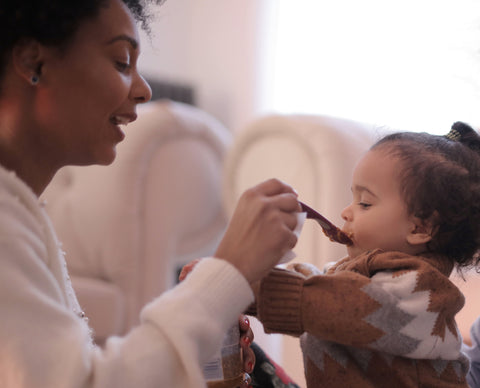
🥄 Spoon-feeding: This involves making purées to offer your baby on a soft, silicone spoon (aka: here comes the aeroplane!). And you’re the pilot — meaning you’re in control over the feeding process, reducing the mess while allowing you to monitor how much your baby tucks into. You’ll also add ‘chef’ to your growing list of mummy superpowers, as spoon-feeding requires cooking food then puréeing.
This is where batch-cooking is life-enhancing. With the amount of time it saves, you’ll soon benefit from a wide range of pre-prepared food in the freezer to rustle up quickly. You can also save time by blending a little of your dinner (try to keep the salt levels low!).
👶 Baby-led weaning: This is where you present your baby with soft food for them to pick up and eat. It engages your little one’s senses as they learn how food feels, smells, looks and tastes. Food becomes familiar to your little one; they may even grow up less fussy about texture, because they are used to lumps.
Ensure their mini meals are well cut-up for easy handling, and to avoid a choking hazard. This is especially important for foods like grapes and blueberries.
Be kind to yourself and your home; baby-led weaning can turn messy. So, keep those wipes at the ready! Your little one will likely spill, splash and smear their food, especially in the early days of weaning. It may also be tricky to tell how much they’ve eaten, so keep a close eye on your baby while they feed.
We suggest you try a mix of spoon-feeding and baby-led weaning, especially at the start of your weaning journey. Trial-and-error is a great way to work out what’s best for you and your little one.
💩 Can Weaning Cause Tummy Ache and/or Diarrhoea? 💩
It takes time for babies to physically acclimatise to solids, so anticipate some tummy troubles. This is the reason experts don’t recommend weaning babies younger than six months old, as their digestive systems aren’t mature and the risk of gastrointestinal infections and allergies is greater.
😓 Can Weaning Help Reflux? 😓
Reflux happens when a baby brings up milk or is sick during —or shortly after — feeding. Reflux can also happen if your little one is overfeeding. Your little one only needs 150-180 mg/kg a day. If they’re consuming more than the required amount, try fewer, more frequent feeds throughout the day.

Here’s the science behind reflux: the ring of muscle between their oesophagus (or food pipe) and stomach (known as the ‘esophageal sphincter’) is still developing. This means milk can easily come back up when their position is changed after a feed.
Sometimes, reflux does improve with weaning - partly because your little one’s insides are a little more developed as they grow.
Your GP may also recommend starting on solids early if your little one is prone to regurgitation or sickness to aid digestion. But if your baby is less than 17 weeks (or at least four months) we don’t recommend weaning!
🤮 Can Weaning Make My Baby Sick or Gag? 🤮
It’s human nature to react to new sensations or experiences. And, gagging is quite an important (and common) human reaction to prevent choking. It’s a safety mechanism, powered by our bodies, to protect us. So, as scary as your little one gagging might seem, just keep calm and make sure to monitor their food intake.
Weaning can evoke unpleasant and worrying physical responses in your baby. You may feel a little panicked or worried if your baby reacts in a slightly different (maybe very different) way than when they breast or bottle feed, but try to stay calm. Cherish weaning as one of your baby’s ‘firsts’ — it’s a special time, but one which requires supervision, care and patience.
While weaning, a baby will learn to regulate the amount of food they can chew and swallow. It’s a learning process, and therefore, VERY important. However, babies have highly sensitive gag reflexes, which could be triggered by a number of new sensations, such as:
- A lump of food travelling down their little throat.
- If they dislike the flavour of what they’re eating.
- If they push their fingers in their mouths while eating.
The initial signs of gagging include watery eyes, tongue hanging out of the mouth and retching movements, or even vomiting. This is all very normal.
However, what’s not so normal is when gagging escalates into choking. To learn more on how to stop a child from choking, please read these NHS guidelines .
🤤 Our serving suggestions: 🤤
- Cut round foods like grapes, blueberries or cherry tomatoes into very small pieces, ideally shaped like batons rather than circles.
- Puree or blend food, especially in the early days of weaning.
- Peel vegetables. Remove pips from fruit.
- Strip bones from fish or meat.
- Avoid hard foods like apples or nuts.
- Discourage older siblings from sharing food.
🍽 Weaning Chart for Babies 6 Months and Older 🍽


🥣 A good weaning diet:🥣
A good diet for your baby includes lots of vegetables, fruits and grains. Cereals, porridge and even soups are a great source of nutrition, without being too hazardous on your little one’s throat. Do note, though, that if you are giving your little one any baby cereals that you check the suitability of age on the package (for example, many Kendamil cereals are suitable for little ones 4 months and older, where others are only suitable for 10 months and older).
Use your discretion when it comes to certain tastes and textures - strong flavours might be especially harsh on your little one’s taste buds. For the most part, though, you know your little one best - so if they like the flavour of a certain dish, keep it in their diet!

🙅♀️ Try to avoid: 🙅♀️
- Salty, greasy foods (such as bacon or fried foods).
- Nuts that aren’t finely ground.
- Excessively sugary foods.
- Honey (until your little one is 1 year of age).
👶 Allergies 👶
Allergies can emerge in early life. Get ahead by introducing foods that could trigger reactions one at a time, in tiny amounts, within their usual diet.
The NHS suggests experimenting with the following:
- Gluten
- Eggs
- Milk
- Nuts, peanuts and seeds (serve these crushed or ground)
- Soya
- Shellfish and fish
Evidence reveals that delaying introducing peanuts and hens’ eggs after 6-12 months may increase the risk of allergy.
If your little one has a diagnosed food allergy — or there’s family history of food allergies, eczema, asthma or hay fever — it’s wise to be extra careful when introducing solids, so consult your GP first. Read labels closely and avoid food that contains suspect ingredients.
🥵 Signs of an allergic reaction include: 🥵
- Diarrhoea or vomiting
- Coughing
- Wheezing / shortness of breath
- Itchy throat or tongue
- Itchy skin/rash
- Swollen lips and throat
- Runny or blocked nose
- Sore, red and itchy eyes
In extreme cases, a severe allergic reaction — anaphylaxis — can be life-threatening. If your baby is experiencing severe symptoms, call 999 immediately.
✨ To conclude... ✨
It’s natural to worry about weaning. This is a transitional time for you and your baby. Things are changing and you’re witnessing your little one’s first real sign of independence. Keep smiling! This is an amazing time - and you’ve done amazingly well!
Remember that your baby is on a tasty trip towards new sensations, improved physical strength and cognitive development! So, enjoy every moment. As long as you keep alert and monitor your little one through their changes, your little one will have a happy weaning experience. After all, #informedisbest.
Well done on this fabulous milestone, KendaParents!
- Choosing a selection results in a full page refresh.
!